AI-ARTS competition
Reimagine — 5th AI-ARTS Competition 2026
Explore Reimagine — 5th AI-ARTS Competition 2026.
Organised by AI-ARTS.
Explore the competitionAI-ARTS competition
Explore Reimagine — 5th AI-ARTS Competition 2026.
Organised by AI-ARTS.
Explore the competitionFree for the AI arts community
The free foundation has supported AI artists for the last four years, and will continue to do so.
The platform is free for AI artists and the community. Additional features can be provided when you need more capacity, larger file uploads, a dedicated domain, or specialised features to support your practice.
Organisations can use the free platform tools for competitions, open calls, and galleries. Enhanced features are available for larger programmes that require more capacity, additional domains, or advanced functionality.
AI-ARTS artwork
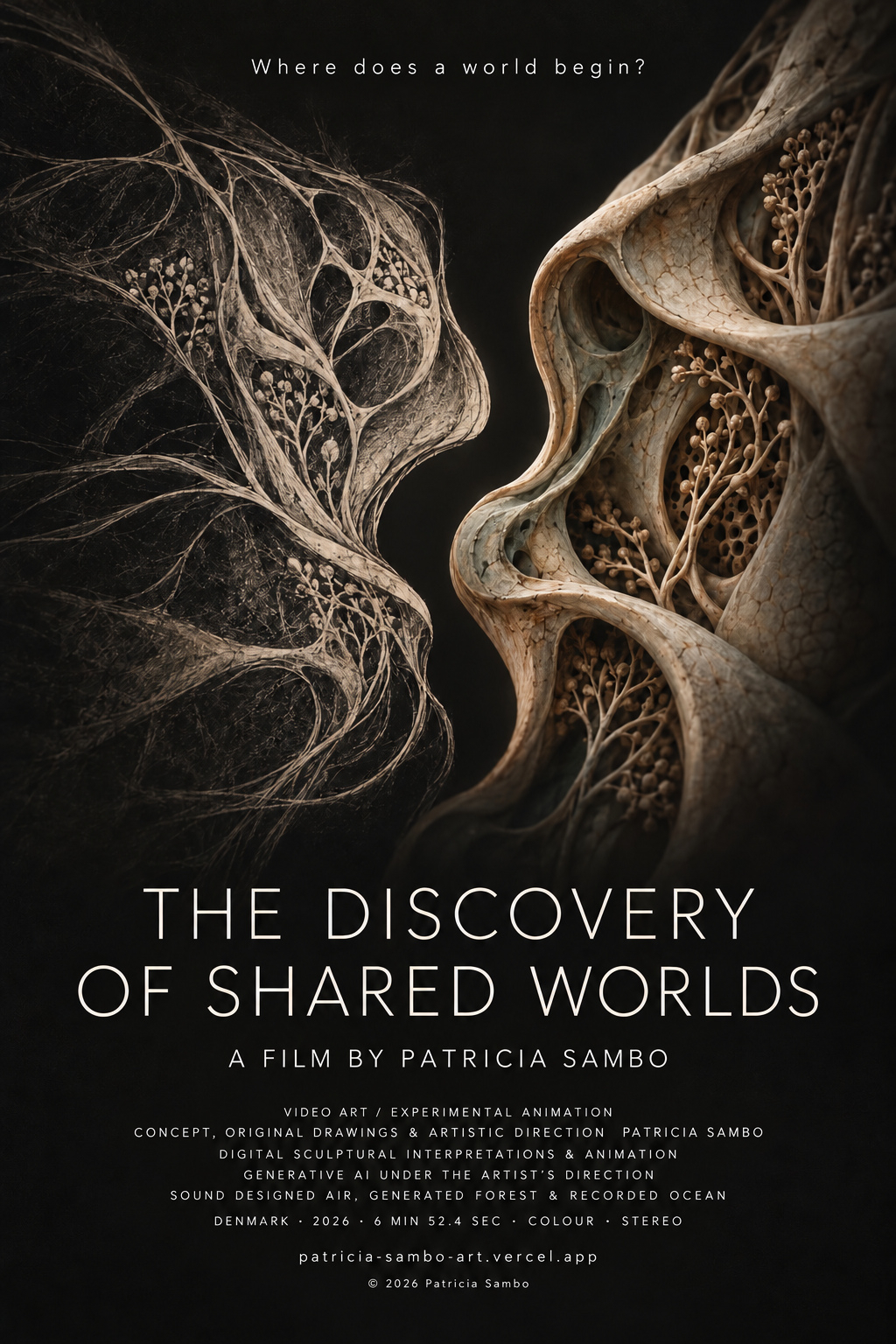
Through an iterative exchange with AI, the drawings became digital sculptural bodies and moving environments. I directed this transformation while allowing unfamiliar interpretations to challenge what I thought the drawings could become. For me, reimagining begins here, in the space between recognising a form and allowing it to become something I had not foreseen.
The film moves through three encounters. In The Birth of Inner Worlds, separate forms draw close and give rise to something resembling the beginning of life. In A World Takes Root, entanglement becomes shelter and a forest emerges. In The Architecture of Becoming, curved and stepped forms join in a structure that opens to the ocean, admitting life beyond the beings that brought it into existence.
What interests me is what these transformations ask of the beings involved. Each must give up something of its earlier form for a shared world to exist. Yet their differences persist. The new worlds carry traces of separate origins, and their strangeness, beauty and strength are inseparable from the changes that made them possible.
The surrender does not end with the first encounter. A world needs to be sustained. It asks for care, room and continuing change; eventually, it may grow beyond the intentions of those who created it. I recognise this tension in intimacy, friendship and parenthood: the desire to build a life together, and the fear that making room for another might leave too little room for oneself.
The making of the film holds a related tension. Passing my drawings through AI meant relinquishing some control over their interpretation while retaining responsibility for what I chose to make of the results. I selected, rejected and revised the generated material, directing the relationships, movement, pacing, text and sound. The possibility of being surprised remained part of the work, alongside the obligation to decide what those surprises meant.
I wanted to hold two fears together: losing ourselves in what we create with another, and protecting ourselves so completely that we never discover what might have existed between us. What must we give up for a shared world to live, and what must remain ours if we are to keep living within it?
This YouTube video is not loaded
You can load this video once, or change your external media choice. YouTube may receive information about this visit.
This YouTube video is not loaded
You can load this video once, or change your external media choice. YouTube may receive information about this visit.
Through an iterative exchange with AI, the drawings became digital sculptural bodies and moving environments. I directed this transformation while allowing unfamiliar interpretations to challenge what I thought the drawings could become. For me, reimagining begins here, in the space between recognising a form and allowing it to become something I had not foreseen.
The film moves through three encounters. In The Birth of Inner Worlds, separate forms draw close and give rise to something resembling the beginning of life. In A World Takes Root, entanglement becomes shelter and a forest emerges. In The Architecture of Becoming, curved and stepped forms join in a structure that opens to the ocean, admitting life beyond the beings that brought it into existence.
What interests me is what these transformations ask of the beings involved. Each must give up something of its earlier form for a shared world to exist. Yet their differences persist. The new worlds carry traces of separate origins, and their strangeness, beauty and strength are inseparable from the changes that made them possible.
The surrender does not end with the first encounter. A world needs to be sustained. It asks for care, room and continuing change; eventually, it may grow beyond the intentions of those who created it. I recognise this tension in intimacy, friendship and parenthood: the desire to build a life together, and the fear that making room for another might leave too little room for oneself.
The making of the film holds a related tension. Passing my drawings through AI meant relinquishing some control over their interpretation while retaining responsibility for what I chose to make of the results. I selected, rejected and revised the generated material, directing the relationships, movement, pacing, text and sound. The possibility of being surprised remained part of the work, alongside the obligation to decide what those surprises meant.
I wanted to hold two fears together: losing ourselves in what we create with another, and protecting ourselves so completely that we never discover what might have existed between us. What must we give up for a shared world to live, and what must remain ours if we are to keep living within it?
@patriciasambo-art1
From Angola to Copenhagen, Patrícia Sambo traces uncanny forms between body, plant and imagined space through charcoal drawing and human–AI exchange. Influenced by surrealist automatism, she explores how these forms emerge through both handmade and technologically mediated processes, creating a foundation for her ongoing investigation of transformation and authorship. In her series Ambivalent Mutations, handmade, collaboratively developed and AI-generated images share a visual language while emerging through different processes. Moving between paper and digital imagery, the series examines authorship as a sequence of interventions rather than a single act. It asks how knowing the origins of an image changes what we see—and whether that knowledge alters the value we give it. Her latest work, The Discovery of Shared Worlds (2026), extends these questions into a six-minute, fifty-two-second experimental film developed from six original drawings. Through AI-assisted digital sculptural interpretations and animation under her artistic direction, separate forms approach, become entangled and create worlds neither could have made alone. Three encounters—The Birth of Inner Worlds, A World Takes Root and The Architecture of Becoming—move from an intimate, womb-like interior to a living forest and an architecture opened to the ocean. At the heart of the film is the cost of creating and sustaining a shared world. The beings retain traces of their different origins, but parts of their separate identities must change or be relinquished for something new to exist. Their transformations connect the unfamiliar imagery to questions of love, friendship, parenthood and care: how do we make room for another without losing ourselves? And what might we lose by protecting ourselves so completely that nothing can grow between us? Beauty and vulnerability remain inseparable, as the world they create begins to require its own space and the freedom to develop beyond their intentions. This tension also shapes Sambo’s process. Working with AI introduces interpretations she cannot fully anticipate, while selection, revision and artistic direction remain essential to the work. Across drawing and film, she investigates how an image—or a self—can be transformed through encounter without entirely losing the traces of where it began.
publicationRecordDated
publicationRecordPresented
Private review notes and submission details remain private.
5.0 from 2 ratings
Recent public works from the AI-ARTS Gallery.


Selected from meaningful public signals such as the artist, released competitions, work type, categories, tags and title.