AI-ARTS competition
Reimagine — 5th AI-ARTS Competition 2026
Explore Reimagine — 5th AI-ARTS Competition 2026.
Organised by AI-ARTS.
Explore the competition

AI-ARTS competition
Explore Reimagine — 5th AI-ARTS Competition 2026.
Organised by AI-ARTS.
Explore the competitionFree for the AI arts community
The free foundation has supported AI artists for the last four years, and will continue to do so.
The platform is free for AI artists and the community. Additional features can be provided when you need more capacity, larger file uploads, a dedicated domain, or specialised features to support your practice.
Organisations can use the free platform tools for competitions, open calls, and galleries. Enhanced features are available for larger programmes that require more capacity, additional domains, or advanced functionality.
AI-ARTS artwork
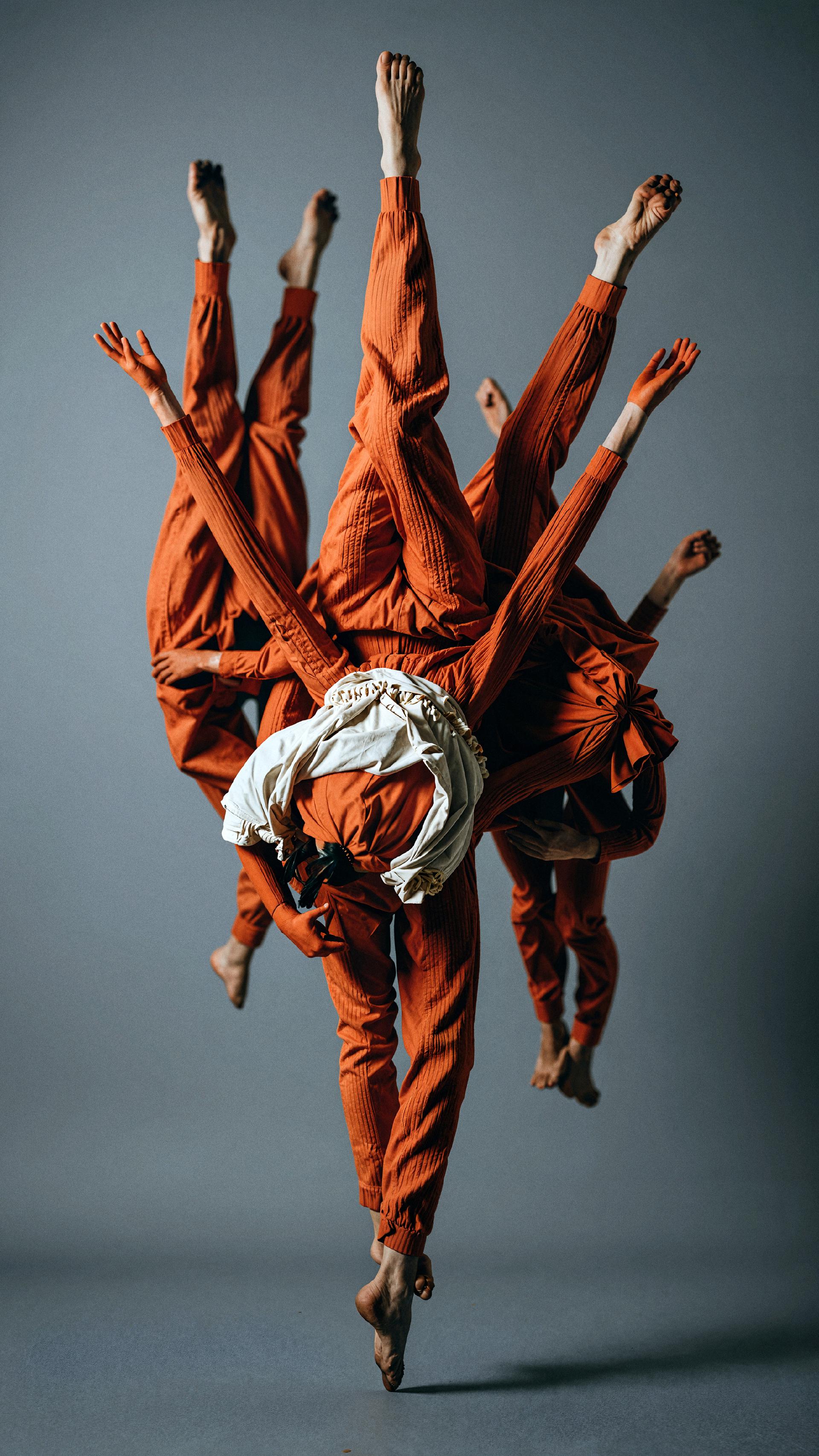
The question behind the series is older than the tools: what remains of the changes we made, or meant to make? Not the decision itself, but its residue in the spaces we live in, the groups we belong to and the picture we keep of ourselves. A corridor keeps the orange that has run down its walls. A crowd wears one colour that none of its members chose alone. A figure splits into the version that sits and the version that stands. The orange travels through all of it, from clothing to drapery to the stains on the concrete, as if the change had soaked into everything it touched.
The images were generated locally with Z-Image Turbo, steered by LoRAs, among them art_vision, a model I trained on my own earlier work. A film-grain pass gives them the surface of something remembered rather than something rendered. In this book, the series continues as an augmented-reality film: scan the trigger image with the Artivive app, and the ten pictures flow into one another.
@stefan-eisele
I search for the texture that algorithms weren’t designed to produce. Specifically, the rust, the erosion, the weight of material – rendered by a machine that has never touched a surface. Because of my background in industrial design, I understand how materials behave: how steel weathers, how paint cracks, and how surfaces carry the memory of time. Consequently, I use that knowledge to push generative AI toward something it resists – the impure, the heavy, the tactile. In practice, my work lives in the gap between digital precision and physical decay. During the process, every image passes through dozens of iterations, manual corrections, and conscious decisions about what stays raw and what gets refined. Yet the machine consistently proposes clean surfaces – so I drag them toward friction. As a result, what emerges carries the tension of both worlds – algorithmic clarity haunted by material memory.
publicationRecordDated
publicationRecordPresented
Private review notes and submission details remain private.
Not rated yet.
Selected from meaningful public signals such as the artist, released competitions, work type, categories, tags and title.


Recent public works from the AI-ARTS Gallery.