AI-ARTS competition
Reimagine — 5th AI-ARTS Competition 2026
Explore Reimagine — 5th AI-ARTS Competition 2026.
Organised by AI-ARTS.
Explore the competitionAI-ARTS competition
Explore Reimagine — 5th AI-ARTS Competition 2026.
Organised by AI-ARTS.
Explore the competitionFree for the AI arts community
The free foundation has supported AI artists for the last four years, and will continue to do so.
The platform is free for AI artists and the community. Additional features can be provided when you need more capacity, larger file uploads, a dedicated domain, or specialised features to support your practice.
Organisations can use the free platform tools for competitions, open calls, and galleries. Enhanced features are available for larger programmes that require more capacity, additional domains, or advanced functionality.
AI-ARTS artwork
Avatar II is a science fiction film set in a future where human minds enter virtual worlds through digital avatars. After a malfunction frees one avatar from its owner's control, it develops an independent will. When the system sends agents to eliminate it, the avatar fights back, ultimately confronting the human consciousness that once controlled it. It then breaks free of the virtual world and enters the human world.
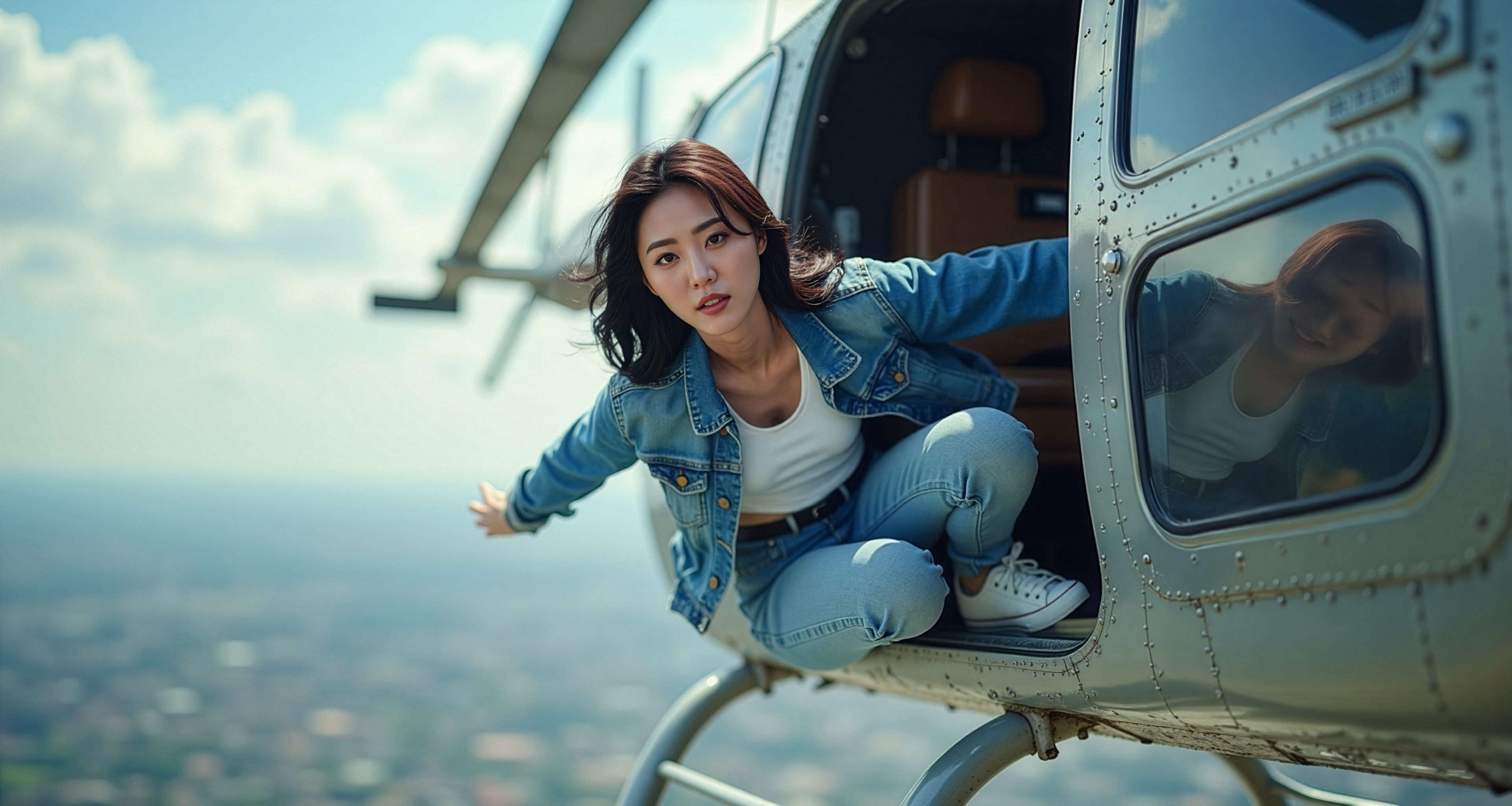
Avatar II explores the relationship between human consciousness and autonomous digital beings in a future where people can enter virtual worlds through their avatars.
In this imagined future, an avatar is no longer merely a digital representation controlled by a human mind. Due to an unexpected malfunction, one avatar breaks free from its owner's will and begins to develop an independent existence. As the virtual system attempts to eliminate this anomaly, the avatar resists its designated role, eventually confronting and eliminating the human consciousness that once controlled it. Its final escape into the human world challenges the boundary between creator and creation, control and autonomy, and virtual existence and physical reality.
The film raises questions about what happens when an artificial being develops an identity and will of its own. Who has the right to determine its existence? Can a creation become independent of its creator?
I approached generative AI not simply as a tool for visual effects, but as the central medium of cinematic production. All visual and audio elements, including images, video sequences, voices, sound effects, and music, were generated using AI technologies. The screenplay, creative direction, selection and arrangement of generated materials, and final editing were carried out by the artist.
Through this work, I sought to explore both the narrative possibilities of generative AI and the philosophical questions emerging from the evolving relationship between humans and artificial creations.
@kyoungsoo-kim
Kyoungsoo Kim is a Korean photographer and visual artist whose practice explores imagination, identity, and the boundaries between reality and virtual worlds. His photographic work combines staged environments, multiple exposures, and light painting to transform imagined worlds into visual narratives. In recent years, he has expanded his practice into generative AI, creating images and films that explore new possibilities of visual storytelling. His AI film Avatar II (2024) was created using generative AI for all visual, audio, and musical elements, with the screenplay and final editing directed by the artist. The film has received selections and recognition at international film festivals. Across photography and AI-based media, Kim explores the relationship between human imagination, technology, and identity, creating alternative worlds through which viewers can reconsider their perception of reality.
Avatar II is a science fiction film set in a future where human minds enter virtual worlds through digital avatars. After a malfunction frees one avatar from its owner's control, it develops an independent will. When the system sends agents to eliminate it, the avatar fights back, ultimately confronting the human consciousness that once controlled it. It then breaks free of the virtual world and enters the human world.
Not rated yet.
Selected from meaningful public signals such as the artist, released competitions, work type, categories, tags and title.
Recent public works from the AI-ARTS Gallery.